Pakistan Tightens Axle-Load Enforcement: What Fleet Operators Should Prepare For
Federal updates in August and September 2026 signal tighter, more technology-led axle-load enforcement in Pakistan, including automated weigh stations and stronger coordination. Fleet operators should prepare their loading records, vehicle condition and tyre specifications before the next dispatch—not wait for a roadside problem.
What the 2026 official updates say
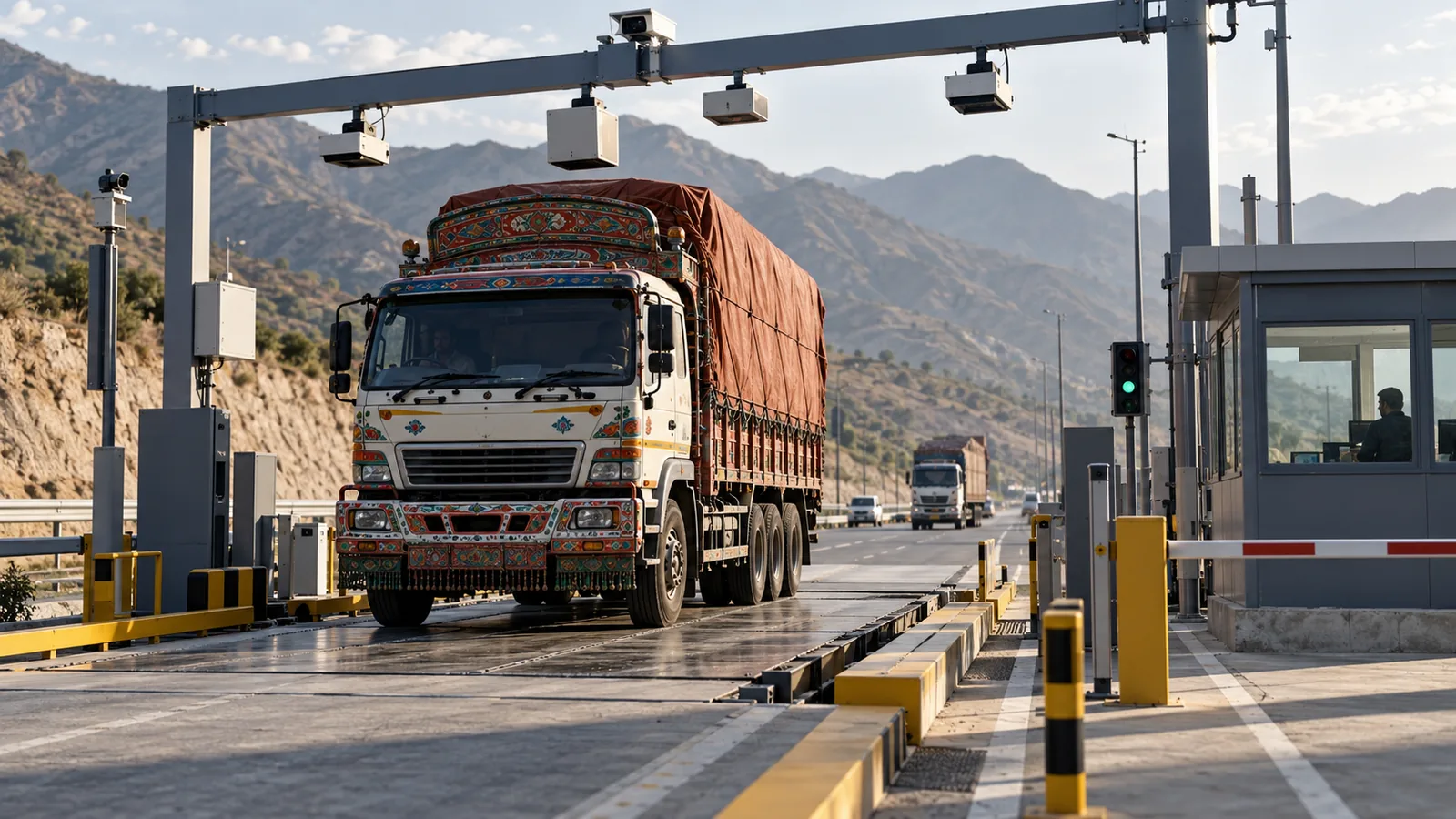
On 28 August 2026, Pakistan’s Press Information Department reported federal direction for stricter axle-load compliance and transparent, technology-based monitoring. A 24 September update described automation of weigh stations, links with vehicle databases and monitoring intended to reduce manual discretion. The NHMP 2024–25 yearbook provides operational context for enforcement and road-safety activity.
These notices describe an enforcement direction, not a complete legal schedule for every vehicle and road. Operators should verify the current National Highway Safety Ordinance requirements, notified limits, route rules and implementation status with the relevant authorities. This article does not reproduce a universal axle limit because the applicable figure depends on vehicle configuration and current law.
Prepare the vehicle and the paperwork
- Know the loaded axle weights. Use reliable weighing and keep records for the vehicle configuration and trip.
- Control distribution. A legal gross weight can still hide an overloaded individual axle. Review placement before dispatch.
- Match tyres and wheels. Confirm size, load index, speed symbol, rim, inflation and axle fitment against approved vehicle and tyre information.
- Inspect condition. Pressure loss, damage, irregular wear or mismatched duals can reduce the safety margin under load.
- Brief drivers. Drivers should know the documents carried, the planned route and the process at a weigh station.
- Keep an exception process. Stop and correct a load or tyre issue rather than sending the vehicle onward.
Why tyre load index belongs in the loading plan
A tyre’s load index identifies a rated carrying capacity under specified conditions. It is not permission to overload the axle, and capacities cannot be added casually without considering single or dual fitment, inflation, speed, wheel rating and vehicle approval. The lowest-rated relevant component can constrain the assembly.
For load-index truck tyres, procurement teams should keep the full service description rather than recording only the nominal size. Two tyres marked 315/80R22.5 may have different service descriptions or intended applications. Ask a competent tyre professional to confirm the combination for the axle and operating conditions.
Build a position-specific RFQ
| RFQ field | Example information | Purpose |
|---|---|---|
| Size | 315/80R22.5, 295/80R22.5 or 11R22.5 | Starts the catalogue match |
| Position | Steer, drive, trailer or all-position | Identifies the job of the pattern |
| Vehicle | Make, model, axle configuration and rim | Supports fitment review |
| Operation | Route, surface, speed and typical load | Separates long-haul, regional and mixed duty |
| Requirement | Load index, speed symbol and quantity | Prevents an incomplete price-only quote |
MYCO’s catalogue lets buyers begin with steer, drive, trailer or all-position views. Common-size starting points include 315/80R22.5, 295/80R22.5 and 11R22.5.
Use enforcement readiness as a maintenance control
Automated weighing increases the value of accurate upstream data. Connect dispatch, loading, maintenance and procurement records so an axle issue can be traced and corrected. Review repeated overloads by customer, route and vehicle configuration, then change the loading plan or equipment rather than treating each stop as an isolated event.
A pre-dispatch review should name one accountable person, record the weighing source and flag any last-minute cargo change. Procurement records should preserve the tyre’s full size and service description, while maintenance records preserve fitted position and pressure standard. When those records use the same vehicle and axle identifiers, the team can answer a weigh-station query quickly and investigate a recurring imbalance with evidence. Digital tools can help, but a consistent paper process is still better than incomplete data spread across departments.
When requesting heavy vehicle tyres in Pakistan, provide the full RFQ fields above and ask MYCO to confirm current sample-range availability. Final fitment, pressure and legal compliance remain with the operator and qualified advisers.
Frequently asked questions
What are the current axle-load limits in Pakistan?
They depend on vehicle configuration and current notified rules. Confirm the applicable legal schedule and route requirements with the relevant Pakistani authority.
Does a high tyre load index make an overloaded axle legal?
No. Tyre capacity does not override axle, vehicle, wheel or road-law limits, and it depends on approved operating conditions.
What details should a commercial tyre RFQ include?
Include size, full service description, position, vehicle and rim, axle configuration, operating load, route, speed profile, quantity and delivery location.
References
- Press Information Department — Axle-load enforcement update, 28 August 2026
- Press Information Department — Automated weigh-station update, 24 September 2026
- National Highways & Motorway Police — Year Book 2024–25
Technical and regulatory information should be checked again before operational or legal decisions.
Related publications
Hot-Weather Truck Tyre Pressure: A Fleet Checklist for Pakistan
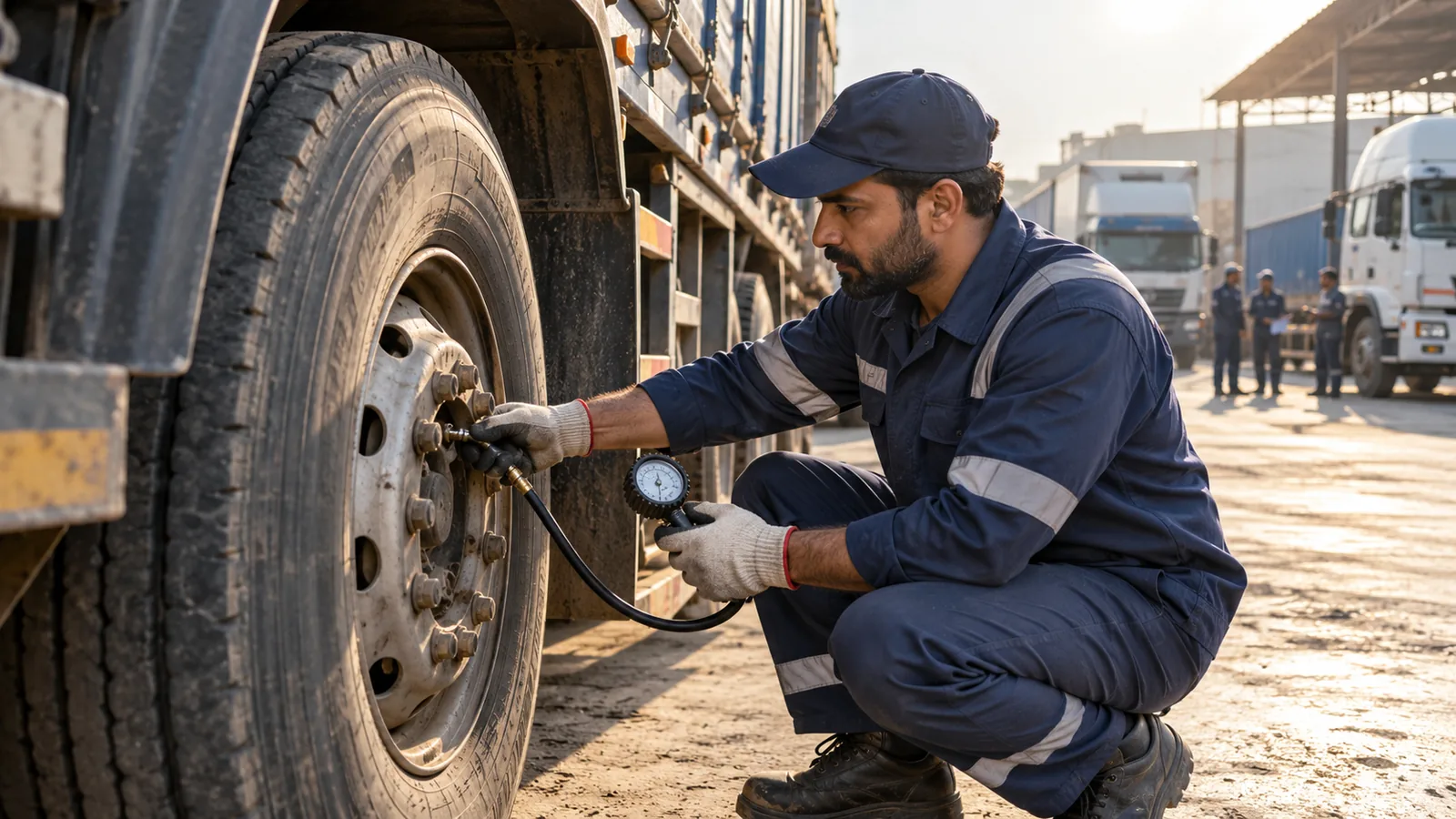
A practical truck tyre pressure checklist for Pakistan fleets covering heat, axle load, valves, damage checks and 315/80R22.5 tyre selection.
Read publication
The Lowest Tyre Price Is Not Always the Lowest Fleet Cost
How fleets in Pakistan can compare commercial truck tyres by cost per kilometre, downtime, fuel influence, maintenance, route and casing value.
Read publication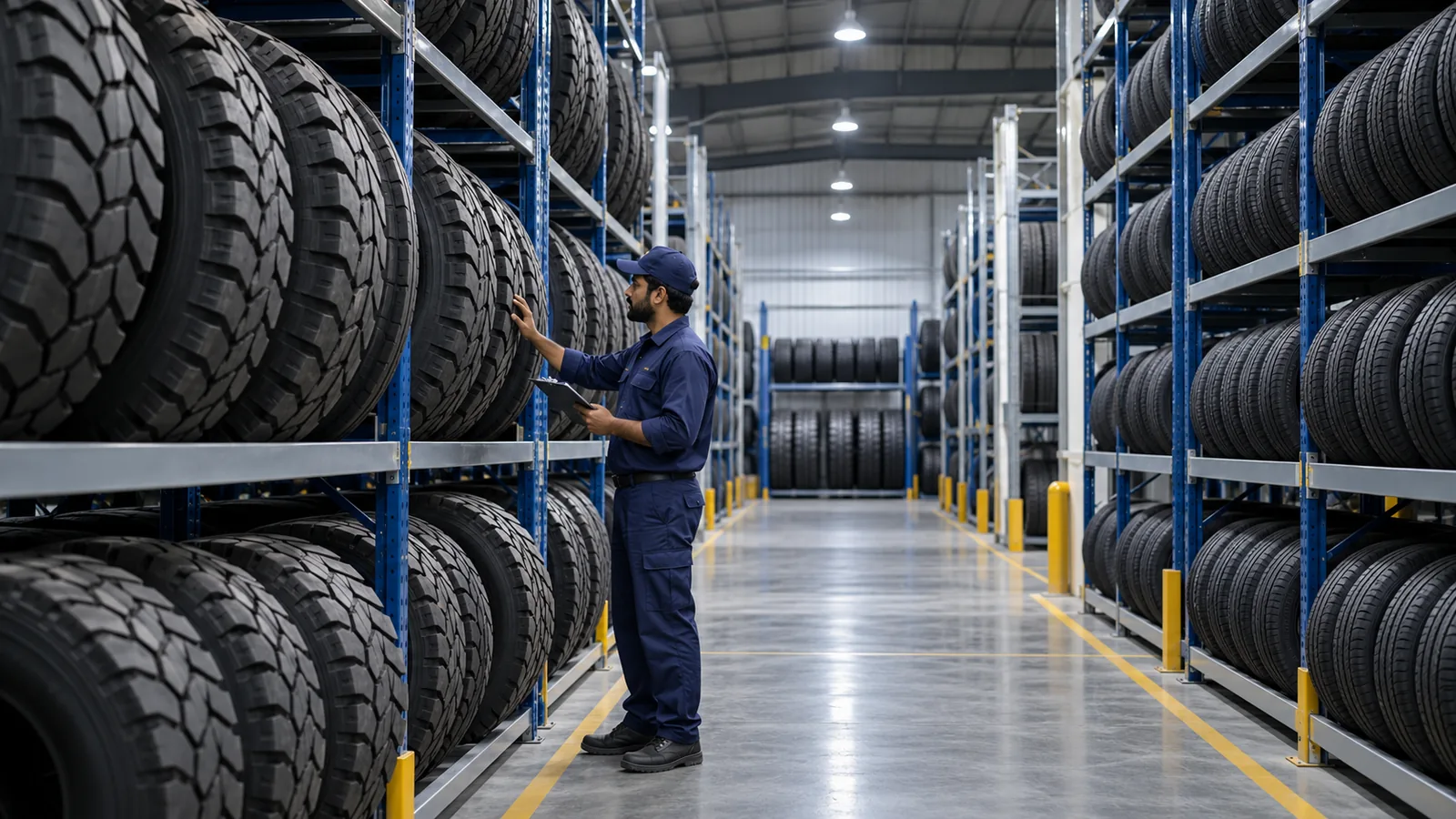
How Tyre Dealers Should Store TBR and PCR Tyres in Pakistan’s Climate
Practical tyre storage guidance for Pakistan dealers covering sunlight, heat, moisture, ozone, chemicals, positioning, stock rotation and inspections.
Read publicationDiscuss your tyre requirement
Tell MYCO what the vehicle carries, where it runs and which axle needs a tyre.